Measured Against the Many: Bubney’s 2026 Fleet Benchmarking Review

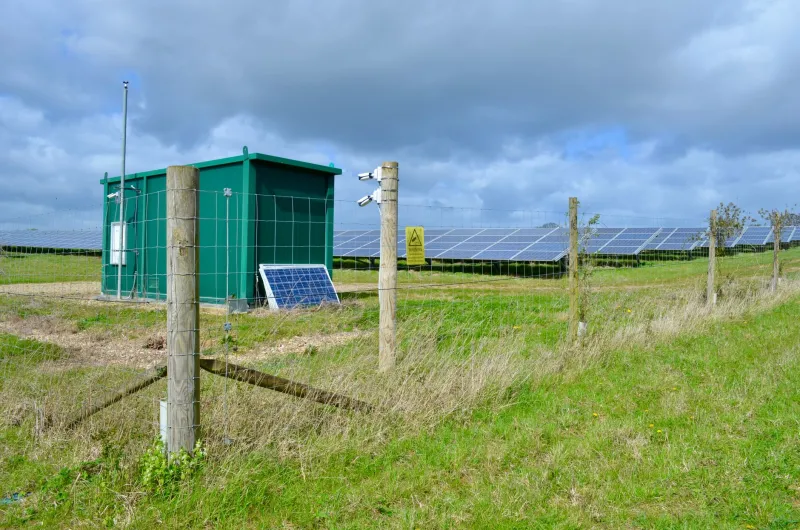
Photo: Md. Ahsanul Haque Nayem, CC BY-SA 4.0, via Wikimedia Commons
Benchmarking has become a routine part of operating a solar farm, but it is easily mistaken for a league table. A headline figure for annual generation may say more about the weather than about the quality of operations. For Bubney, the useful question in 2026 is not whether the site has beaten a neighbouring array, but whether it is performing as it should given its location, its equipment and the constraints of the network it feeds.
Why raw yield is a poor referee
A solar farm’s annual output depends on far more than the skill of its maintenance team. Latitude, cloud cover, soiling, snow, shading and grid curtailment all leave a mark on the meter. Specific yield, usually expressed in kilowatt-hours per kilowatt-peak, normalises for installed capacity but not for the weather. A bright year flatters every operator; a dull one penalises even the most diligent.
This is why Bubney treats raw yield as a starting point rather than a verdict. The site’s 2026 review uses weather-corrected specific yield, drawing on on-site irradiation measurements and a consistent reference dataset. That does not remove uncertainty, but it prevents a sunny spring from being mistaken for operational excellence.
The benchmarks that actually travel
Some measures compare reasonably well across the British fleet. Performance ratio, which expresses actual output as a proportion of what the available sunlight should produce, is one of them. So is technical availability, provided planned outages are separated from unplanned ones. A site that reports 99 per cent availability without distinguishing between scheduled inverter work and a failed transformer is telling only half a story.
Maintenance cost per installed megawatt is another common comparison, but it needs care. A figure that covers module cleaning but excludes balance-of-plant repairs is not comparable with one that includes the full scope. Bubney’s approach in 2026 is to report maintenance cost in defined bands, with the scope stated plainly and independent assurance where possible.
Mean time between failures is useful for inverter fleets, particularly as equipment ages. Inverter replacement rates and spare-part lead times also matter. These are operational signals that a generation total can hide.
Weather, wires and vintage
The UK solar fleet is not a uniform sample. Sites differ in age, DC-to-AC ratio, mounting type and inverter technology. An older fixed-tilt array will not behave like a newer site with trackers, even if both are well run. Comparing them without adjustment is a recipe for false conclusions.
Grid connection is the other great unequaliser. A farm in a constrained part of the network may be curtailed on days when it could otherwise export at full output. Bubney therefore reports curtailment-adjusted figures alongside gross generation. This is not an excuse; it is an accounting correction. Without it, the site would appear weaker than its equipment and maintenance actually are.
Weather variability deserves the same honesty. A single year is a short sample. Bubney’s review uses rolling three-year comparisons where data allow, and it flags when a benchmark is based on a particularly mild or windy year. The aim is to distinguish a trend from a spell.
Community outcomes are harder to normalise
Community funds are often compared on a simple pounds-per-megawatt basis. That measure has its uses, but it says nothing about governance, longevity or local benefit. A fund that is large but slow to distribute is not obviously better than a smaller fund that local groups can access easily.
Bubney’s 2026 review adds two modest measures: the fund value indexed to the consumer prices index, and the proportion of spend that stays within the local economy. Neither is a perfect indicator. Together they give a clearer picture than a single headline figure. The same caution applies to biodiversity and public access. Habitat hectares and footpath metres can be counted, but their quality depends on management over time.
What Bubney is changing in 2026
The benchmarking review has led to several practical changes. First, Bubney is adopting a like-for-like dashboard that reports weather-corrected yield, curtailment-adjusted output and availability in a consistent format. Second, the site will publish a short annual operations note setting out maintenance cost bands and the scope behind them. Third, inverter maintenance is moving from a purely calendar-based schedule to a condition-based approach, using thermal imaging and performance data to prioritise interventions.
On the community side, the fund will be indexed to inflation and reported by category, so that local residents can see what has been committed and what has been spent. Bubney is also joining a regional operator forum to share anonymised operational data. The purpose is not to rank participants but to improve the quality of comparison across the fleet.
Finally, the site will commission an independent review of its benchmarking methodology. That may sound like an inward-looking exercise, but it is a safeguard against the temptation to choose metrics that flatter. A benchmark is only useful if it can withstand scrutiny.
A fair yardstick, not a trophy
The neighbour’s yield is worth knowing, but it is not a verdict. Bubney’s 2026 review is an attempt to compare honestly: to account for the sky, the wires and the vintage of the equipment, and to report community outcomes with the same care as generation. Benchmarking is a discipline, not a competition. The field, the forecast and the grid all have a say in the result.