A Path Through the Panels: Designing Solar Farms for Walkers and Neighbours
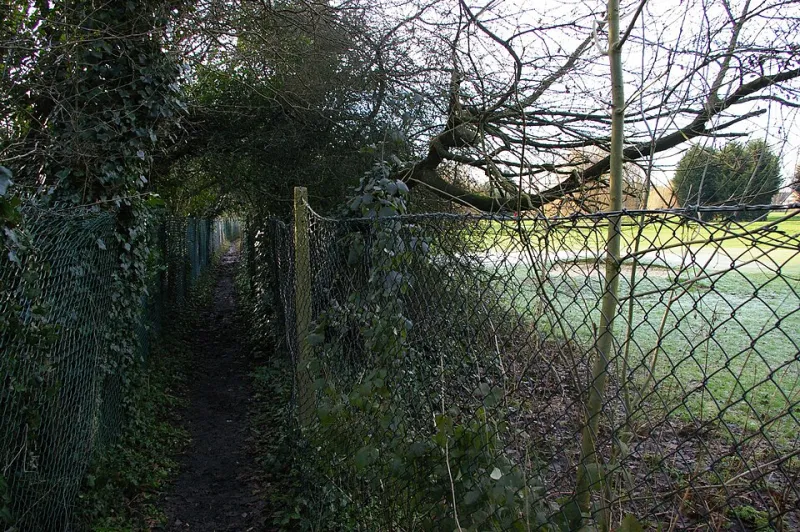
Photo: Christopher Hilton , CC BY-SA 2.0, via Wikimedia Commons
Solar farms are frequently discussed as though they begin and end at the fence line. In practice, their neighbours experience them through smaller details: a gate that is easy to open, a path that stays dry underfoot, a hedge that is cut at the right time, or a view that remains recognisably the same place. For a development to become familiar, those details matter. At Bubney, access has been treated as an design question rather than a public-relations add-on.
The legal line on the map
Public rights of way are recorded on the definitive map and statement maintained by the local highway authority. They are legal routes, not informal privileges, and a solar farm cannot simply move one because it suits the layout. Diversion or extinguishment requires a formal process, usually involving the highway authority and consultation. Permissive paths are different: they are offered voluntarily by a landowner and can be closed with notice. Confusing the two is one of the quickest ways for a developer to lose trust.
Starting with constraints, not megawatts
At Bubney, the layout process began with a constraints map rather than a capacity target. Footpaths, bridleways, field boundaries, drainage patterns, protected hedgerows and utilities were plotted before array blocks were fixed. The aim was not to create a sterile corridor through the panels but to give walkers a route that feels like a normal countryside path: wide enough for two people to pass, with stable surfaces, self-closing gates and waymarking that matches the definitive map.
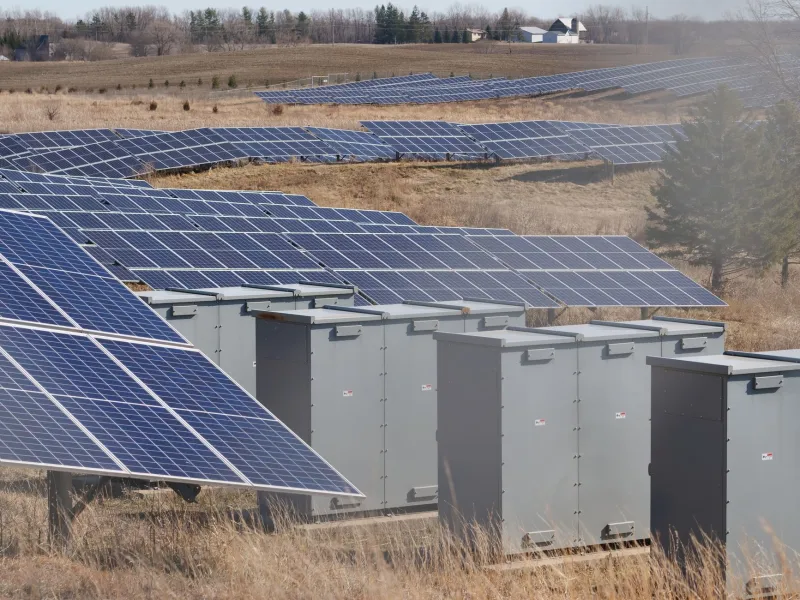
Fencing is necessary around energised equipment, but it does not have to dominate the route. Setting the deer fence back from the path, using stock-friendly gates where appropriate and keeping vegetation cut back from gateways all reduce the sense of walking through an industrial compound. Where a path runs close to a string of panels, a grass margin and a low hedge can soften the boundary without pretending the array is not there.
Sightlines and the politics of screening
Landscape mitigation is often reduced to a single instruction: screen the development. That is too simple. A solar farm that is entirely hidden from every viewpoint may satisfy a visual impact assessment, but it can also feel secretive and disconnected. The more useful question is where screening should be deep, where it should be partial, and where a view across the array is acceptable.
At Bubney, existing hedgerows have been retained where possible, with gaps managed to preserve views from nearby footpaths and lanes. New native hedging is intended to grow into a filter rather than a wall. Height and cut timing are planned so that the hedge does not obscure waymarks or create an enclosed tunnel. Seasonal change is part of the design: a hedge that is dense in July may be more open in February, and that variation helps the site read as a working landscape rather than a sealed compound.
The everyday test
Access is not only a matter of legal routes. It is also about how a path feels after rain, whether a dog can pass a gate without being lifted, and whether a walker can see where the route goes next. These are modest concerns, but they shape whether a development is accepted or resented. Construction brings additional pressures: temporary diversions, muddy surfaces and heavy vehicle movements. Clear notice, maintained alternatives and a named contact are more useful than vague assurances.
After commissioning, the work continues. Path surfaces need inspection, gates need adjustment, and vegetation needs management. A solar farm is a long-term land use, and a footpath across it is a long-term relationship. The test is not whether the path looks good on a plan but whether it remains usable on a wet Tuesday in November.
What good access can and cannot do
Good access will not persuade every objector, and it should not be presented as a substitute for addressing genuine landscape or ecological concerns. What it can do is make a development legible. A path that is kept open, a hedge that is managed and a gate that works are small signals that the site is being operated with care. Familiarity is earned slowly, through repetition and maintenance rather than a single consultation event.
For Bubney, the footpath test is therefore ongoing. The site must be judged not only by its export figures but by whether local people can still walk the routes they know, and whether the landscape they pass through remains recognisably theirs. That is a modest ambition, but a practical one.