Wires Before Panels: Why the Grid Queue Now Shapes a Solar Farm's Fortunes
A solar farm is usually described in terms of its hardware: the number of modules, the hectares enclosed, the megawatts of direct current available on a bright June afternoon. The figure that genuinely governs how much clean power reaches the network, however, is none of these. It is the export capacity agreed at a single point of connection — and in the UK today that figure is harder to secure than almost any other part of a project.
For Bubney Solar Farm, as for hundreds of developments across the country, the connection agreement is the document that determines what the site can do. Reading it carefully explains a great deal about how a modern solar farm behaves, including the occasional bright day on which generation appears lower than the sunshine would suggest.
The connection, not the sunlight, is the binding constraint
The output of an array rises and falls with irradiance, but the network it feeds has a finite appetite at any given moment. A connection offer specifies a capacity in megawatts — technically, for larger sites, a transmission entry capacity — and that ceiling applies regardless of how much the panels could produce. Where the local network is strong, the ceiling is rarely reached. Where it is weak, or where many generators share the same stretch of overhead line, the ceiling becomes a daily consideration rather than a theoretical one.
This is the practical heart of the grid queue debate. It is not simply a matter of cables being too thin. It is a question of how much generation a given part of the system can accept while remaining stable, and of how fairly and efficiently that limited room is allocated.
How the backlog accumulated
The origins of the present queue are several and overlapping. The feed-in tariff era encouraged a first wave of small and medium-scale generation. The contracts for difference regime then brought forward large projects. More recently, battery storage has joined the same queues, and co-located generation and storage schemes have multiplied. Each of these developments is welcome in its own right; collectively, they have produced a volume of applications many times greater than the network can physically accommodate within this decade.
The allocation method compounded the problem. Under a broadly first-come, first-served approach, projects could secure a connection date early in their development and hold it for years, whether or not they were ever likely to be built. Speculative applications therefore occupied space in the queue that viable projects needed. Successive reforms, led by Ofgem and now administered by the National Energy System Operator, have sought to move the industry towards a first-ready, first-connected model, with milestone requirements and clearer consequences for projects that fail to progress. Those reforms are being implemented through 2026, and operators are watching the detail closely.
What actually sits inside a connection agreement
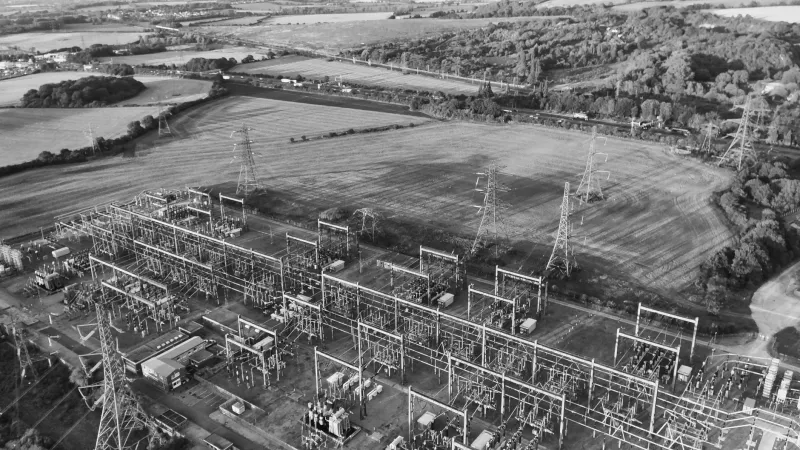
For anyone outside the industry, the paperwork can appear impenetrable. In substance, it does four things. First, it grants capacity: a defined number of megawatts that may be exported. Second, it fixes dates for design, construction and energisation, with milestone obligations attached to each. Third, it sets out securities and liabilities should those milestones slip. Fourth, and often least understood, it imposes technical conditions: protection settings, metering arrangements, voltage and frequency response requirements, and compliance with the grid code.
These technical obligations are not administrative niceties. They are what allow a solar farm to support the network rather than destabilise it, and they are tested before a site is permitted to export at all.
Operating within a limited envelope
Where capacity is constrained, operators have developed a repertoire of responses. Accurate generation forecasting allows a site to anticipate constraint periods and to plan maintenance accordingly. Some connections include flexible or curtailed terms, under which export is automatically reduced when the network is under stress — arrangements often managed through active network management schemes. Battery storage can absorb surplus generation that would otherwise be curtailed, releasing it later. None of these measures creates capacity; they make better use of what exists.
This is why the presence of a battery alongside a solar farm should not be read as an oddity. It is frequently a rational response to a connection that cannot accept everything the panels produce at the moment they produce it.
Why the fence appears before the wires do
Neighbours occasionally ask why a solar farm can be built, fenced and apparently complete while the network reinforcement it depends on seems to lag behind. The answer lies in the separation of responsibilities. Planning permission is a local matter, granted by the planning authority. Connection works are undertaken by the network operator, whose own programme is set by the wider queue and by the availability of engineering resources. Construction of the array and construction of the connection therefore run on different timetables, and energisation can occur in stages as capacity becomes available.
For communities, this is worth understanding for one practical reason: a solar farm that appears quiet is not necessarily inactive. It may be waiting for a network that is itself waiting for reinforcement.
What this means going forward
Grid infrastructure has become as decisive for UK solar as daylight itself. A well-sited array in a sunny corner of the country can be worth less than a modest scheme beside a strong connection. That reality is driving reform of the queue, investment in network capacity, and a more sophisticated approach to siting and design across the industry.
At Bubney, the connection agreement is reviewed as carefully as any planning condition. It determines the site's ceiling, its obligations and, in a very real sense, its usefulness. Clean power is not delivered by panels alone. It is delivered by panels, wires and a system willing to accept what they produce — and the second and third of those are now, quite rightly, receiving the attention they have long deserved.