Between the Rows: The Working Habitat of a British Solar Farm
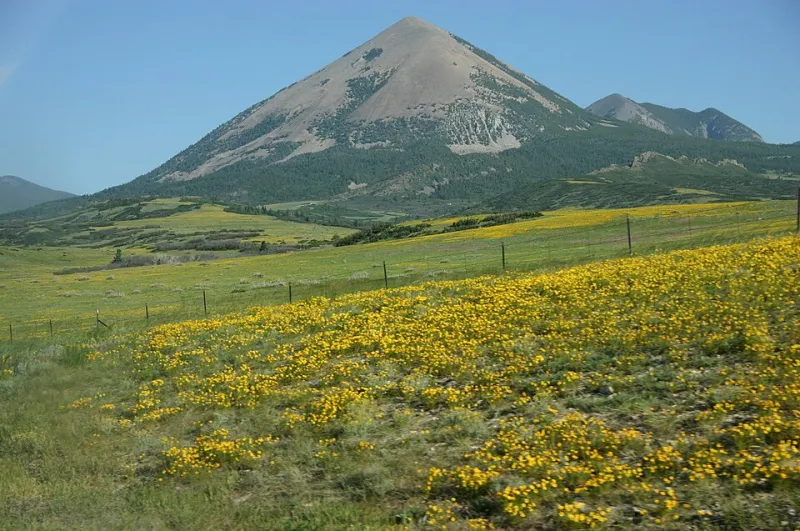
Photo: Wing-Chi Poon, CC BY-SA 2.5, via Wikimedia Commons
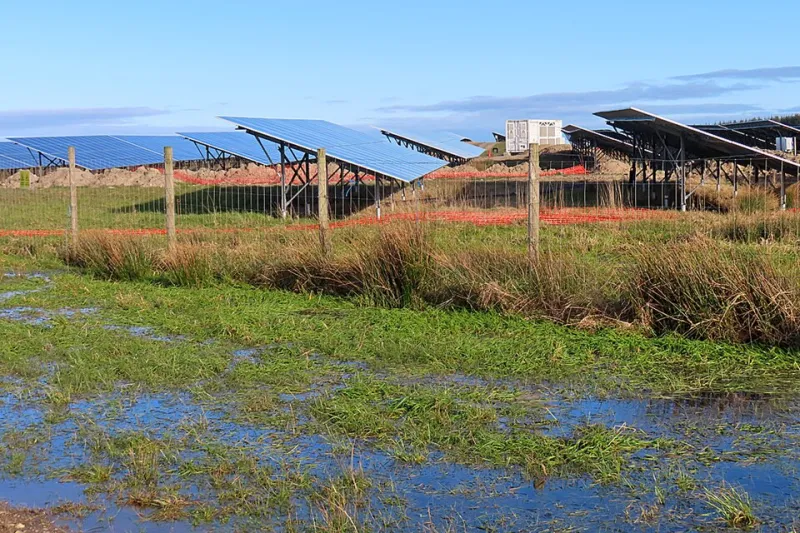
At ground level, a solar farm is easy to misread. From the road it can look like a field of glass and steel, with the land beneath treated as little more than a mounting surface. At Bubney Solar Farm, the working assumption is different: the ground between and beneath the arrays is a managed habitat, and its condition is part of how the site is judged.
That does not mean pretending a solar farm is a nature reserve first and an electricity asset second. It is honest about both roles. The arrays generate clean power; the land around them can support grazing, pollinators, birds and soil health if the management plan is designed for those outcomes. The interesting work happens in the details.
A field with more than one job
UK solar farms are often built on improved grassland or arable land, and the switch from intensive use can create immediate changes in how the site is managed. Regular mowing is expensive and can be a blunt instrument. Conservation grazing with sheep is one alternative, and it is one that Bubney Solar Farm uses where ground conditions allow.
Grazing is planned around sward height and season rather than applied as a routine. Sheep keep grass from shading the lower edges of panels, reduce the need for mechanical cutting, and return nutrients to the soil in a slow, distributed way. Their presence also influences structure: some areas are grazed shorter, while others are left taller for invertebrates and small mammals. Not every site can support livestock, particularly where ground is wet, access is difficult or rare plants are present. The principle is to choose a management tool that matches the site rather than force one method everywhere.
Wildflower margins and tussocky strips do a different job. They provide nectar through the growing season, shelter for insects and overwintering cover. Hedgerows are managed with gaps and varied height where possible, because a hedgerow that is cut uniformly every year offers less to wildlife than one with structural diversity.
The species that use the gaps
Skylarks are a useful indicator of how open grassland is being managed. They need low vegetation with patches of bare ground or short turf for foraging and nesting. A uniform tall sward is poor for them; so is a closely mown lawn. A mosaic is better. At Bubney, the management plan leaves uncut margins and times any cutting outside the main nesting season so that breeding birds are not disturbed.
Bumblebees need continuity of flowers rather than a single burst of colour in midsummer. Native wildflower strips along hedgerows and fence lines can connect areas that would otherwise be isolated, allowing pollinators to move through the site. The value comes from the whole network: flower-rich strips, hedgerows, rough grass and undisturbed corners. Invertebrates benefit from tussocky grass, log piles and areas left alone through winter. These are modest interventions, but they are the kind of land management choices that can be recorded, reviewed and improved.
Biodiversity net gain is a commitment, not a slogan
Biodiversity net gain is now part of the planning system in England, and it asks developers to leave habitats in a measurably better state than before. For a solar farm, that means more than planting a wildflower mix and moving on. A credible project should be able to show a baseline survey, a habitat creation or enhancement plan, and a monitoring schedule.
The Defra biodiversity metric is commonly used to calculate losses and gains, but it is not a substitute for field observation. Local nature groups can ask specific questions: What was the baseline? Which habitats will be created or enhanced? How will grazing be managed? When will monitoring take place? Who will review the results? A good answer will be plain and specific, and it will accept that management has to adapt when results are not as expected.
What to look for on a site visit
If a nature group is invited to visit a solar farm, it is worth looking for variation rather than a single tidy picture. Is there a mix of sward heights? Are there bare, sunny patches as well as taller grass? Do the flower strips connect to hedgerows? Are there wet corners, refuges and areas that are not strimmed to the edge? In spring and summer, listen for skylark song and watch which flowers are attracting bees. Record what you see, with dates and locations, and avoid entering nesting areas.
The most useful records are repeated over time. A single visit can show what is present on the day; a series of visits can show whether management is working. Ask whether those records feed back into the site's annual plan. A well-run site will not claim every survey is perfect, but it should be able to explain how it responds when monitoring shows a problem.
Power, place and plain speaking
Solar farms are part of the UK's clean-energy mix, and they occupy land. That land use deserves scrutiny. The strongest projects are transparent about both generation and ecology, and they treat habitat management as operational work with schedules, records and review. At Bubney Solar Farm, the aim is to keep that work visible: not as a decorative extra, but as part of what it means to operate responsibly in a local landscape.
Clean power rooted in the local landscape is not only about the electricity exported to the grid. It is also about the condition of the field after the panels are in place. The most revealing view of a solar farm may not be from the road. It is from ground level, between the rows, where grass, flowers, insects and birds respond to how the land is managed. That is where the case for a solar farm becomes more than a generation figure. It becomes a question of whether the site can show its working, season after season.