Grey Skies, Useful Kilowatts: Reading a Cloudy British Summer at Bubney
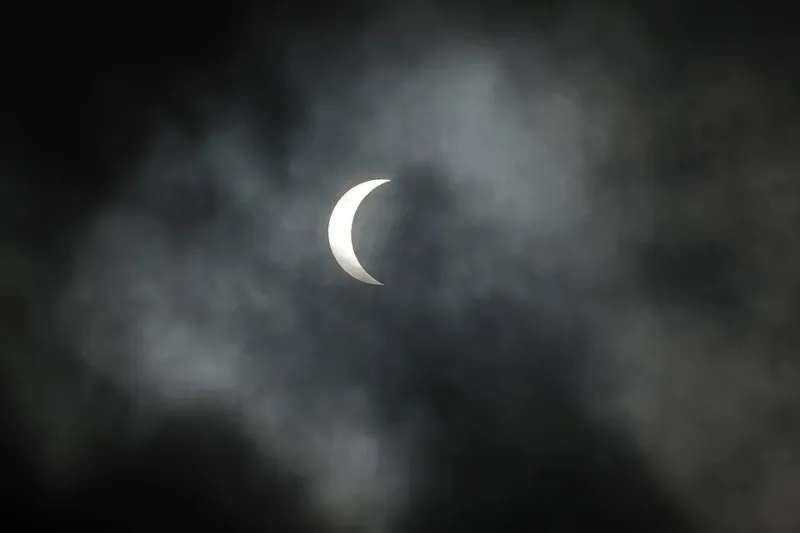
Photo: NASA Marshall Space Flight Center / Michael DeMocker, Public domain, via Wikimedia Commons
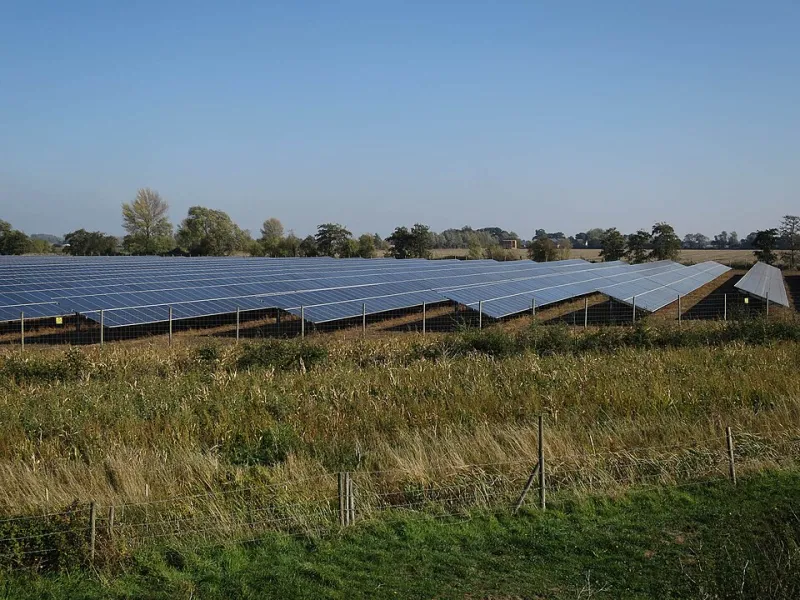
British solar farms are often imagined as machines for blue-sky days. The mental image is a bright June afternoon, a clear horizon and panels angled towards an unobstructed sun. Real British summers rarely work like that. Weeks can pass under layered cloud, with bright intervals rather than sustained direct sunshine. The useful question is not whether a solar farm produces anything in such conditions, but how much it produces, why, and how operators distinguish ordinary grey-weather output from a fault.
Direct and diffuse: two parts of the same sky
Sunlight reaches a panel by two main routes. Direct irradiance travels in a straight line from the sun and casts a sharp shadow. Diffuse irradiance has been scattered by clouds, water vapour, dust and air molecules, arriving from many directions across the sky. On a clear day, direct light dominates. Under overcast skies, the direct beam may be greatly reduced, but diffuse light is still substantial. A tilted panel faces the whole sky dome, not just the sun, so it continues to collect energy even when no sharp shadow is visible.
Global horizontal irradiance is the sum of direct and diffuse components on a horizontal surface. Solar farm monitoring usually records irradiance in watts per square metre and integrates it over time to give irradiation in kilowatt-hours per square metre. Those units matter because a grey day is not a zero day. It is a lower and differently shaped generation profile.
Why output does not fall to zero
A photovoltaic cell converts a portion of the light falling on it into direct current. The process does not require a visible disc of sun. It requires photons with sufficient energy, and diffuse daylight contains them. Output falls because irradiance falls, not because the mechanism stops. A heavily overcast summer day might deliver a modest fraction of clear-sky output, but across a long summer day that fraction can still add useful kilowatt-hours.
Panel technology matters at the margins. Modern modules have improved low-light performance and better temperature coefficients than older designs. Cooler cloudy conditions can partly offset lower irradiance, because photovoltaic cells are more efficient when they are not hot. Rain can clean dust and pollen from the glass, though heavy rain may briefly reduce output. Bypass diodes help limit losses when part of a module is shaded, but they are not a cure for site-level shading from hedges or buildings.
The British summer pattern
UK summers are characterised by long daylight hours and variable cloud. Atlantic low-pressure systems can bring thick cloud and rain, while high pressure can deliver clear, warm spells. The mix means that annual yield is not built from a handful of perfect days. It is accumulated across many ordinary ones. A solar farm's performance ratio—the ratio of actual output to the output expected from the irradiance it receives—is a useful measure because it separates weather from technical performance.
Temperature is a factor that surprises some observers. A hot, cloudless afternoon can reduce module efficiency even as irradiance peaks. A cool, bright morning may produce comparatively strong output. In summer, the longest days are not always the hottest or the clearest. This is one reason why operational data is more useful than intuition.
Reading grey skies at Bubney
At Bubney, monitoring is designed to answer a practical question: is today's output consistent with today's light? Pyranometers or reference cells record irradiance, while inverter and string-level data show how the array responds. The operations team can compare the two and look for anomalies. A cloudy day that affects the whole site is a weather event. A single string lagging behind its neighbours under uniform diffuse light is a signal worth investigating.
Data quality matters. Sensors need cleaning and calibration checks. Inverter data needs to be time-aligned with irradiance measurements. Without those disciplines, a grey day can look like a fault, and a fault can hide in ordinary weather. The aim is not to explain every kilowatt-hour but to build a reliable picture of how the site behaves across seasons.
What this means for expectations
Solar in Britain is not a fair-weather technology, but it is a weather-dependent one. No operator claims that an overcast day matches a clear one. The honest position is that diffuse light produces useful output at a lower rate, and that the UK's long summer days provide many hours in which that output can accumulate. Storage and grid flexibility can help move that output to where it is needed, but they do not change the underlying physics.
For local observers, grey-sky generation can be counter-intuitive. Panels may be producing steadily on a day that feels dull. That is not a reason for complacency about winter output, nor for dismissing solar as ineffective in Britain. It is a reason to look at monitored data rather than impressions. At Bubney, the grey days are part of the record, not an exception to it.