Thermal Imaging, Torque Wrenches and Storm Damage: A Year With the Maintenance Crew
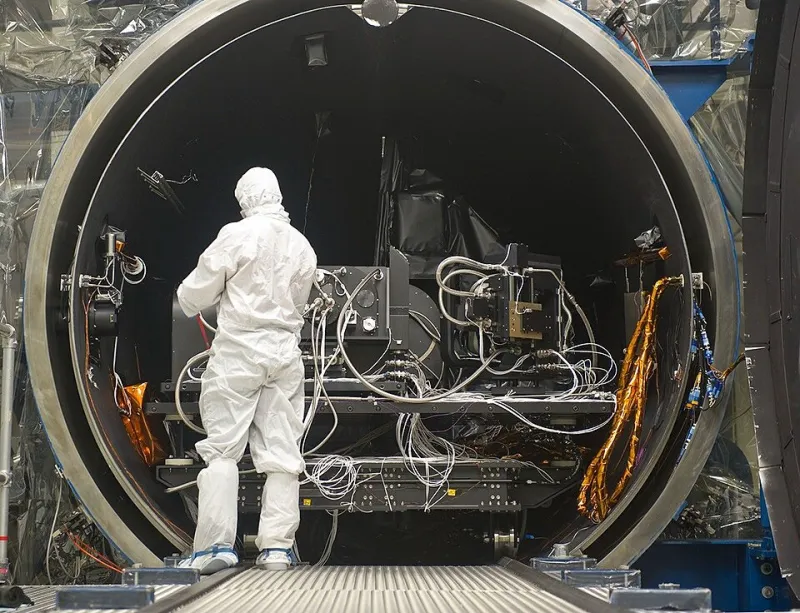
Photo: NASA/Goddard/Bill Hrybyk, Public domain, via Wikimedia Commons
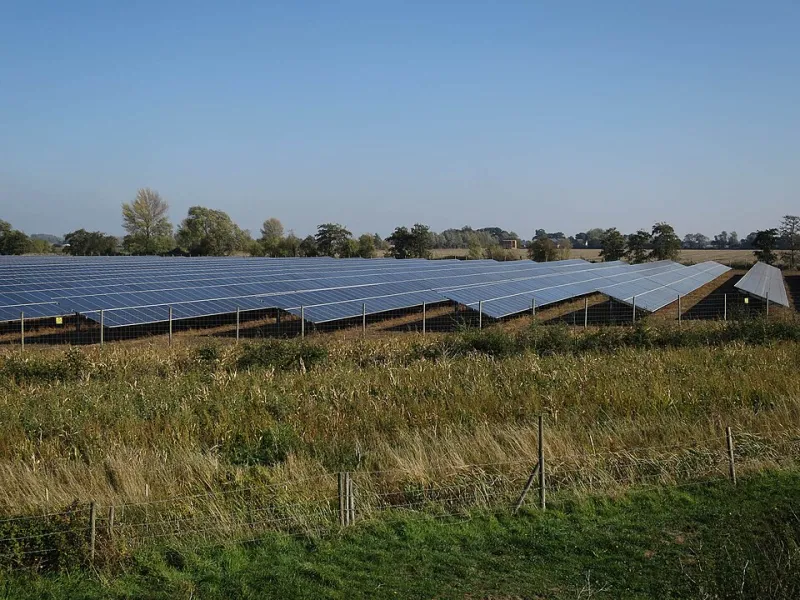
A solar farm in full production looks like an absence of activity. Rows of modules stand in the field, the inverter housings hum faintly, and nothing appears to be happening at all. Behind that stillness sits a year-round programme of inspection, testing and repair, much of it unglamorous and almost none of it visible from the road.
Spend twelve months alongside the team that maintains Bubney and a different picture emerges — one of thermographic surveys in freezing fog, of torque settings verified against a schedule, of fence lines walked after every named storm. It is skilled, methodical work, and without it the clean power statistics that matter to everyone else would quietly decline.
Winter: the season that only looks quiet
Generation is modest in December and January, which makes it the natural window for work that requires a site to be partially stood down. Thermal imaging is the centrepiece. An infrared camera held against a module face reveals hotspots — cells or connections running hotter than their neighbours — long before they produce a visible fault or a measurable drop in string output. A hotspot found in January is a fire risk and a lost kilowatt-hour avoided in July.
The same period suits electrical inspection. DC isolators, combiner boxes and string fuses are opened, checked and where necessary replaced. Torque settings on cable terminations are verified against the manufacturer's schedule, because a connection that has loosened over a summer of thermal cycling will heat, and heat is the beginning of most failures. Inverter firmware is updated, filter mats are changed, and the spares inventory is audited so that a replacement component is on the shelf before it is needed rather than ordered in a panic.
Spring: vegetation, fencing and the long clean
As irradiance climbs, the priority shifts to the things that can shade, obstruct or compromise the array. Vegetation management is planned months ahead and delivered carefully: grass kept below the module frames, hedges cut outside the bird nesting season, and growth around fence lines and inverter plinths controlled so that access is never impeded. Where a site supports grazing, the timing of stock movement is coordinated with the grass-cutting programme rather than fought against it.
Spring is also when the annual mechanical checks fall due. Mounting structures are inspected for corrosion and for the integrity of their foundations; bolts are checked for tightness. Cleaning is considered on evidence rather than routine — soiling matters in some locations and barely at all in others, and a wash that is not justified simply spends water and money.
Summer: heat, peak output and the discipline of not interfering
The best generation months are also the least forgiving. Inverter housings work hardest when ambient temperatures are high and output is near capacity, and derating — the deliberate reduction of output to protect components — is a sign that cooling is struggling rather than that something has failed. Air filters, fans and ventilation paths receive close attention.
Good maintenance teams become deliberately conservative in midsummer. Work is scheduled for early morning, when the array is not at full output and DC risks are more easily managed, and non-essential interventions are postponed. A well-run site in July is one where the technicians are mostly watching data and doing very little.
Autumn: storms, water and the annual audit
The equinoctial gales bring the least predictable work of the year. After each named storm, the fence line is walked in full, looking for lifted posts, damaged mesh and debris carried across the site. Modules are checked for cracked glass or displaced frames. Water ingress into enclosures is investigated promptly, because damp inside a junction box is an intermittent fault that can take weeks to trace once it has spread.
Autumn also brings the annual performance audit: a comparison of actual generation against modelled expectation, adjusted for weather. Discrepancies of a few per cent across a whole site are unremarkable, but a persistent shortfall on one section of array points to a string fault, a failing inverter or a partial shading issue that deserves investigation.
The tools of the trade
The kit list for a year at Bubney is broader than most people expect: an infrared camera, a clamp meter, an insulation resistance tester, a torque wrench with a calibration certificate, a laptop running inverter diagnostics, and a great deal of walking. Increasingly it also includes data analysis, because modern monitoring systems generate more information than any team can inspect manually. The skill lies in setting sensible alarms — so that a genuine anomaly raises a callout while normal variation does not.
What neighbours might notice
For those living nearby, the visible signs of maintenance are modest: a van at the gate, a technician walking a row with a camera, a mower working the margins in late spring. Occasionally a single inverter will be swapped out and a section of the array will fall silent for an afternoon. These are the outward traces of a process that runs continuously, and they are a reasonable thing to ask about at a site meeting or community forum.
Lessons worth passing on
Three observations stand out from a year of this work. The first is that prevention is cheaper than cure by a wide margin: a thermographic survey costs a fraction of a failed inverter. The second is that spares strategy matters as much as technical skill; the fastest repair in the world is no use without the part. The third is that data is only valuable when someone is responsible for reading it.
Solar farms are often presented as passive infrastructure — installed, then left alone. They are not. They are maintained machines, and the quiet competence of the people who look after them is as much a part of the UK's clean power story as the panels themselves.