The Ledger Beyond the Fence: How Bubney’s Output Is Certified, Traded and Explained
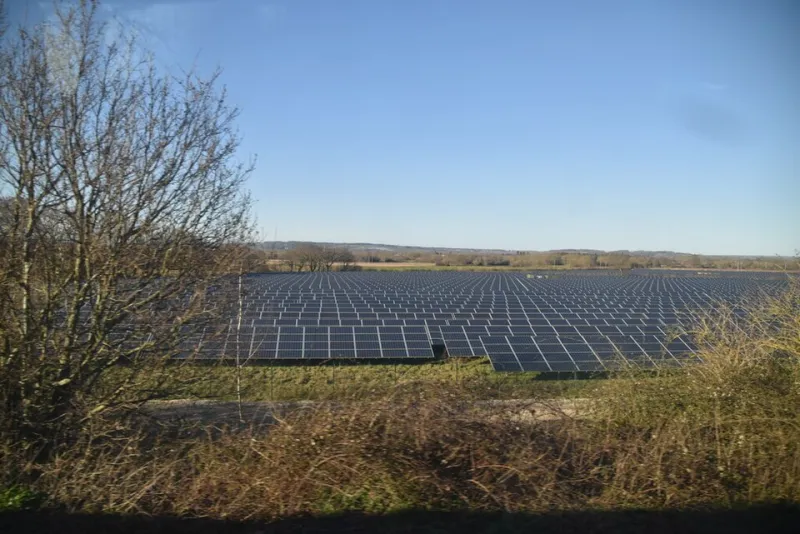
Photo: N Chadwick , CC BY-SA 2.0, via Wikimedia Commons
At Bubney Solar Farm, the visible story is easy enough to follow. Panels face the sun, inverters convert direct current to alternating current, and meters record what leaves the site. The less visible story begins at the substation. From that point, Bubney’s output becomes part of a national system in which electricity, environmental attributes and consumer claims are accounted for in different ways. Understanding that separation is essential for anyone trying to make sense of green tariffs, Renewable Energy Guarantees of Origin, and the recurring debate about additionality.
The point at which electrons become accounts
A solar farm’s export is measured at the generation meter and settled through the arrangements that govern the electricity market. In Great Britain, that means half-hourly data and the Balancing and Settlement Code, alongside the supplier relationships that sit behind the meter. The farm can state how many megawatt-hours it exported in a given period. It cannot, however, follow an individual electron to a particular home, shop or kettle.
This is not a quirk of solar. It is how a meshed electricity network works. Once power enters the distribution network, it mixes with output from other generators. The physical flow is governed by physics, demand and network operation. The commercial and environmental claims are governed by contracts, certificates and disclosure rules. Confusing the two is where many consumer misunderstandings begin.
What a REGO actually proves
A Renewable Energy Guarantee of Origin — usually shortened to REGO — is issued by Ofgem to accredited renewable generators for each megawatt-hour of qualifying output. It is an accounting instrument. It can be transferred separately from the electricity itself. Suppliers use REGOs to demonstrate the renewable content of their tariffs and to meet Fuel Mix Disclosure obligations.
A REGO is therefore evidence that a unit of renewable generation took place and that the associated environmental attribute has been claimed by its holder. It is not a delivery note. It does not prove that the electricity consumed in a particular building came down a particular wire from a particular field. When a supplier says a tariff is 100% renewable, the precise meaning depends on how certificates have been sourced, retired and reported.
Why a sunny afternoon at Bubney may not boil a nearby kettle
On a bright day, Bubney may be exporting at full output while a village a few miles away is importing from the wider network. The two facts can coexist without contradiction. Local demand and local generation are not matched by default. Unless there is a private wire arrangement, a licensed local supply model or a specific contractual link, the electricity is pooled.
That is why the phrase local green energy deserves careful reading. A supplier may buy REGOs from a solar farm in another region and sell them to customers in this one. The certificate is valid, but the geography is not local. For consumers, the useful question is not simply whether a tariff is green, but what exactly is being claimed and on what basis.
Additionality: the question behind the certificate
Additionality asks whether a purchase helped bring about renewable generation that would not otherwise have existed. It is a counterfactual question, and it is rarely answered by a certificate alone. A REGO from an existing solar farm can be a legitimate accounting instrument, but it does not by itself prove that a new wind turbine or solar array was built because of that purchase.
This matters for greenwashing claims. The Competition and Markets Authority’s Green Claims Code and the advertising rules enforced by the Advertising Standards Authority both point in the same direction: claims should be truthful, clear and substantiated. A supplier that says its electricity is renewable should be able to explain whether it relies on REGOs, power purchase agreements, direct investment or a combination of these. A claim that is technically true in certificate terms may still mislead if consumers reasonably infer something more.
For Bubney, certification revenue forms part of the project’s income and supports continued operation. It does not turn every exported megawatt-hour into a locally consumed one, nor does it make the farm a new-build project each year. Being precise about that is part of operating honestly in a market that increasingly rewards verifiable claims.
The value — and the limit — of certification
None of this makes REGOs worthless. Certification gives suppliers a way to account for renewable content, supports investment in operating assets and enables clearer disclosure. It is a useful piece of market infrastructure. But it is not a substitute for grid decarbonisation, storage, network reinforcement or local energy planning. A certificate can tell you something about the renewable content of a tariff. It cannot, on its own, tell you that the electrons in your socket came from the nearest field.
At Bubney, the farm’s contribution is best understood as part of a national mix. The community fund, the habitat work and the operational decisions on site are separate from the certificate market, even if they share the same postcode. Keeping those strands distinct makes for clearer public conversation.
Questions worth asking about a green tariff
Consumers do not need to become settlement experts, but a few straightforward questions can help separate substance from slogan.
- Does the tariff rely on REGOs, and if so, where are those certificates sourced?
- Is there a direct relationship with a generator, such as a power purchase agreement?
- Does the supplier invest in new renewable capacity, or only buy certificates from existing assets?
- Are local supply claims backed by a private wire or a licensed local arrangement?
The answers may vary by supplier and by tariff. The important point is that they can be asked. A green claim should survive a little scrutiny.
The certificate in the socket
The certificate in the socket is invisible, but it is not unimportant. It is one of the ways a renewable generator’s output is recognised, traded and explained. What it cannot do is rewrite the physics of the grid. Bubney’s electricity joins a national pool; its environmental attributes enter a market of their own. Understanding that distinction is not cynicism. It is the beginning of an honest account of what a solar farm delivers, and what it does not.