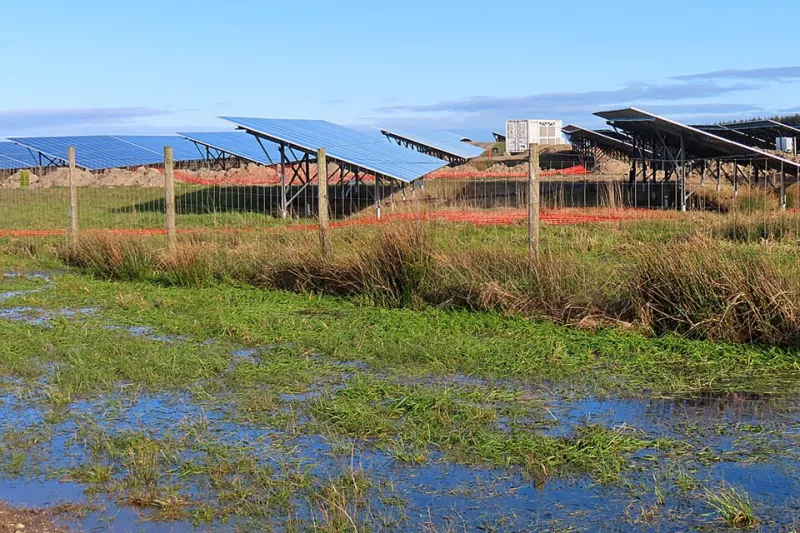
The Sound at the Fence Line: Measuring Solar Farm Noise in a Working Landscape
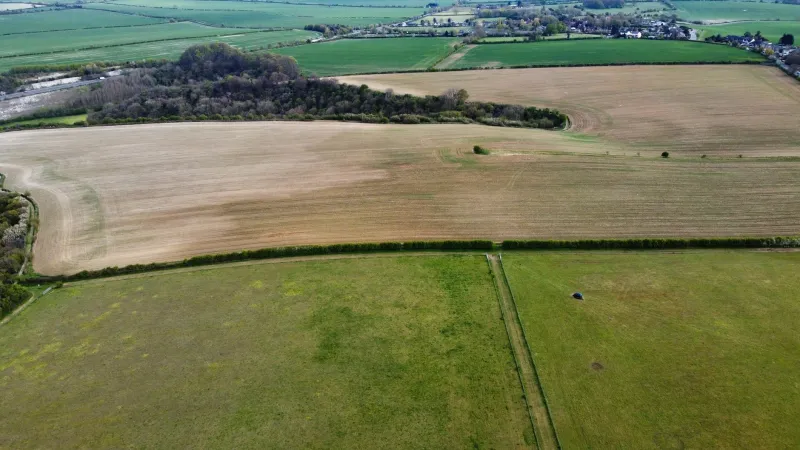
A solar farm does not announce itself with the roar of a turbine or the rumble of a quarry. Its sound is more modest: a low electrical hum from inverter cabinets, the occasional click of contactors, a fan cutting in on a warm afternoon, and the passing of a maintenance van along an internal track. For neighbours, the question is rarely whether the array makes any sound at all. It is whether that sound becomes noticeable, intrusive or simply part of the background.
At Bubney, noise is treated as an operational matter rather than a planning formality. The aim is not to claim that the site is silent. It is to understand what it emits, when it emits it, and how those emissions are experienced at the nearest homes and footpaths.
What the array emits, and when
The main continuous sources on a British solar farm are inverters and transformers. Inverters convert direct current from the panels into alternating current suitable for the grid. They are usually housed in cabinets or small containers, and they produce a low-frequency hum that can carry a short distance in still conditions. Transformers add a deeper electrical drone, often described as a faint buzz rather than a distinct mechanical sound.
Cooling fans are the variable element. On cool, overcast days they may barely run. During a warm, bright spell, when inverters are working hard, fans cycle on and off to manage internal temperatures. That can make the sound profile change through the day. A neighbour may hear very little in the morning, notice a soft hum in the early afternoon, and hear nothing again by evening.
Maintenance adds short-term activity: vehicle movements, panel washing, mowing between rows, torque checks and occasional deliveries. These are not continuous operational sounds, but they can be more noticeable because they are intermittent and familiar. A van door closing at the boundary is a different kind of event from an inverter humming behind a hedgerow.
From decibels to disturbance
Acoustic assessments draw a distinction between measured sound and perceived nuisance. A sound level in decibels is an objective reading. Nuisance is a human judgement shaped by context: the existing background sound, the character of the new sound, the time of day, the listener’s expectation and whether the sound is tonal or intermittent.
A low hum that is barely audible in a windy village may be more noticeable on a still summer evening. A fan that cycles every few minutes can attract attention even when its measured level is modest. This is why UK assessments do not rely on a single number. They consider how the new sound compares with the background, whether it has a tonal character, and how often it occurs.
For solar developments, the relevant framework is usually a site-specific noise assessment prepared for the planning application. It identifies nearby noise-sensitive receptors, measures existing background sound, predicts the operational sound from the proposed equipment, and proposes limits or mitigation where needed. The assessment may refer to BS 4142, the British Standard for rating industrial sound, though the scope depends on the local authority and the specifics of the site.
Distance, screening and planning conditions
Distance is the simplest form of mitigation. Inverter stations are typically positioned away from boundaries and grouped where possible, reducing the number of sound sources close to homes. Topography matters too: a gentle ridge, a hedgerow or a belt of trees can interrupt the path between source and listener, even if it does not eliminate the sound entirely.
Planning conditions often translate the assessment into practical limits. These may specify maximum sound levels at nearby dwellings, restricted hours for certain maintenance activities, or a requirement for commissioning checks once the array is energised. Some authorities ask for a noise management plan covering complaint response and periodic review.
Screening is not only acoustic. A well-maintained hedgerow or planted bund can reduce visual intrusion and soften the presence of equipment, which in turn affects how neighbours interpret what they hear. Perception is rarely purely a matter of sound pressure.
What Bubney monitors through the year
The site’s monitoring is deliberately seasonal. In summer, when fans run more often and maintenance activity is higher, boundary checks focus on inverter stations nearest to public rights of way and dwellings. In winter, when background sound can be lower and the air still, the same equipment may be more audible at a distance. The point is to compare like with like rather than assume a single reading tells the whole story.
Bubney keeps a log of maintenance movements and any noise-related enquiries. If a neighbour reports a concern, the first step is to establish when and where the sound was heard, what it resembled, and whether it was continuous or intermittent. That information helps the operations team decide whether to adjust equipment settings, bring forward a service, or simply explain a short-term activity.
Mitigation in practice
Mitigation begins at procurement. Low-noise inverter models, acoustic enclosures and careful siting of transformer compounds can reduce emissions before operation begins. During commissioning, engineers check that equipment is running within expected parameters and that no cabinet is vibrating excessively or a fan is cycling more than it should.
Operationally, the most effective measures are often unglamorous: keeping doors and panels secure, maintaining cooling systems, replacing worn fans, and scheduling noisy maintenance for reasonable hours. Where a specific receptor is sensitive, the team can sometimes switch an inverter to a reduced-power mode during critical periods, though this has to be balanced against generation and grid obligations.
Listening as an operational discipline
A solar farm’s sound is part of its presence in the landscape. It is not a reason to dismiss neighbours’ concerns, nor is it usually a reason for alarm. The practical task is to measure honestly, explain clearly and respond promptly when something changes.
For Bubney, that means treating the fence line as a place to listen as well as a boundary to maintain. The array may hum, click and occasionally stir a fan into life. What matters is that those sounds remain within agreed limits and that the people living nearby know who to call if they do not.