The Sun in the Wing Mirror: Assessing Glare Risk at a British Solar Farm
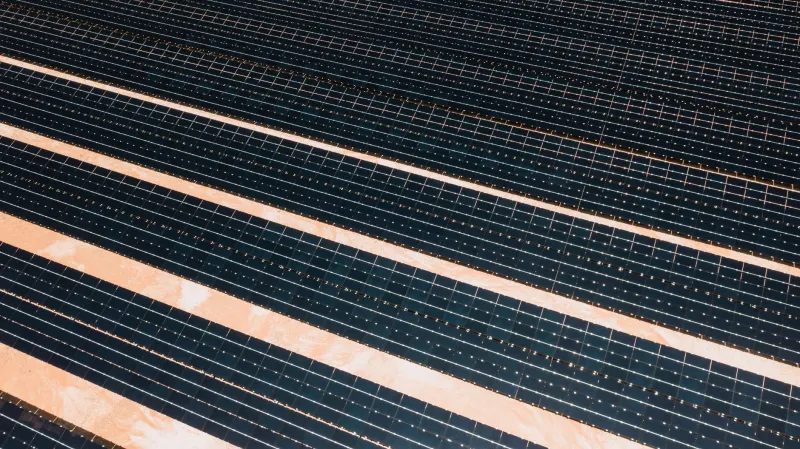
Ask a neighbour what worries them about a solar farm and the answer is rarely the panels themselves. It is the light. A field of glass and aluminium, angled towards the southern sky, invites an obvious question: will it throw a flash into a windscreen, a bedroom window or a cockpit? The concern is reasonable, and it is one that planners, developers and operators are required to take seriously. But the distance between a fleeting reflection and a genuine hazard is considerable, and understanding that distance is the purpose of a glint and glare assessment.
At Bubney, the assessment was not an afterthought appended to the planning application. It formed part of the environmental information submitted with the scheme, and it now sits behind a planning condition that governs how the site is operated. The distinction between glint — a brief, bright flash from a reflective surface — and glare — a more sustained reduction in visibility caused by reflected light — matters because each behaves differently in the landscape and each calls for a different response.
What the assessment actually models
A credible glint and glare study is not a photograph of the site on a sunny afternoon. It is a geometric exercise. The assessor takes the position and height of each receptor — a driver on the A-road to the east of the site, a footpath waymarker, a farmhouse window, a runway approach — and calculates whether, at any hour of the year, the sun's reflection from the panel surface could fall within the receptor's line of sight.
The inputs are specific: the panel tilt and azimuth, the module's reflectivity, the topography of the field, the height of intervening hedges and buildings, and the separation distance. A fixed-tilt array facing south will behave differently from a tracking system that follows the sun across the sky. The assessment runs the geometry across the full year rather than a single midday snapshot, because the riskiest conditions often occur at low sun angles in the morning and evening, particularly between October and March.
For road receptors, the relevant question is whether a reflection could coincide with a driver's critical viewing angle at a distance where stopping sight lines matter. For aviation, the concern is a pilot on approach or departure, and the assessment will consider the glide path and the height of the receptor above the panel plane. For residential receptors, the test is whether a reflection could enter a habitable room for a sustained period. Each receptor type has its own threshold, and a responsible assessment reports the predicted duration and frequency of any reflection rather than simply declaring the site acceptable.
Separating the flash from the risk
Much of the public anxiety about solar glare rests on a misunderstanding of how glass behaves when it is not a mirror. A photovoltaic module is designed to absorb light, not to reflect it. The front glass is textured and coated to maximise transmission to the cells, and the reflection that does occur is diffuse and comparatively weak. A panel is not a window pane or a steel roof; it does not produce the hard, concentrated beam that drivers associate with low sun off a wet road.
The genuine risk cases tend to be narrow and specific: a receptor positioned almost directly in line with the panel's reflected ray at a low sun angle, with no intervening screening, and at a distance where the reflection subtends a meaningful angle. In practice, the combination of topography, hedgerows, field boundaries and the site's setback from the road removes most of these alignments before mitigation is even considered.
That is not an argument for complacency. It is an argument for precision. The value of the assessment lies in identifying the few residual alignments and dealing with them directly, rather than treating the whole site as a uniform hazard or dismissing the concern altogether.
The mitigation that earns its place
Mitigation on a solar farm is rarely a single measure. It is a layered response, and the most effective layers are often the least technological. Setbacks from the site boundary and from the road corridor are the first defence, because reflection intensity falls with distance and the geometry becomes easier to manage. Established hedgerows and new planting do the same work, intercepting the line of sight without introducing a new structure into the landscape.
Where the modelling identifies a residual alignment, operators can specify anti-reflective coatings on the module glass, adjust the panel tilt or orientation within the constraints of the layout, or in some cases use tracker controls to limit the array's exposure at particular times. Fencing and mesh are sometimes proposed, though their value is limited because they screen the lower part of the array rather than the panel face. The mitigation that works is the mitigation that is tested against the specific receptor, not applied as a generic promise.
At Bubney, the approved scheme includes boundary planting and a setback from the road corridor, and the planning condition requires the mitigation to be maintained for the operational life of the site rather than installed and forgotten.
After construction: monitoring and response
A glint and glare assessment is a prediction, and predictions should be tested. The planning condition at Bubney requires a post-installation verification report, and the site maintains a complaint register with a named contact. Any report of glare is logged with the time, date, location and weather conditions, and the operator checks the geometry against the original model.
Seasonal walkovers are carried out at low sun angles, when the risk is greatest, and the findings are reviewed against the as-built layout. If a genuine issue is identified, the response is proportionate: additional planting, a change to the panel configuration or a temporary operational adjustment, agreed with the local planning authority where necessary. The aim is not to prove the model right but to confirm that the site behaves as expected in the landscape it occupies.
Glint and glare will remain a legitimate question for any solar farm, and it deserves a better answer than reassurance. The answer is geometry, evidence and a willingness to keep looking. At Bubney, that is the standard the site is held to.