Temporary by Design: What a Solar Farm Owes the Food-Security Debate
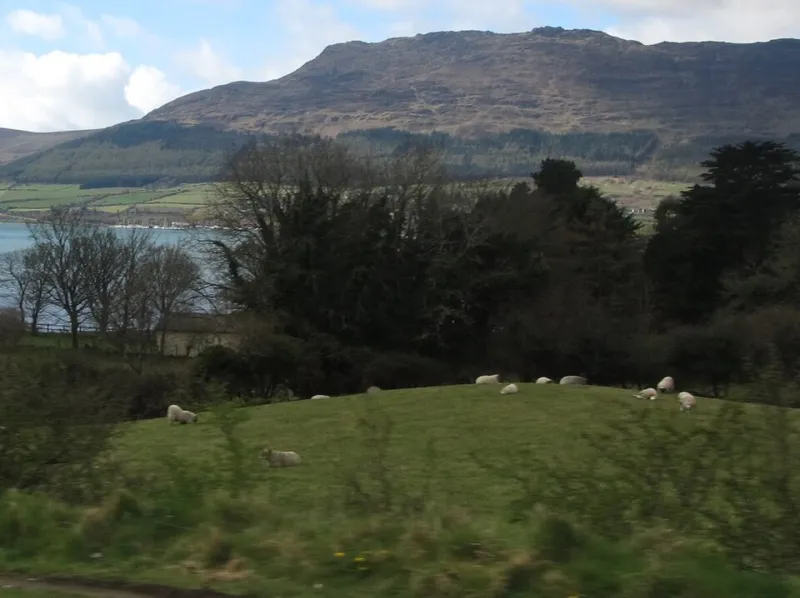
Photo: Eric Jones , CC BY-SA 2.0, via Wikimedia Commons
Food security is not a rhetorical device. It is a legitimate public concern, and any land-use change in the British countryside should be able to answer for itself against it. The debate over solar farms and agricultural land is frequently conducted as a contest of headlines — panels against pasture, energy against food — but the reality is more granular. The useful question is not whether solar farms use land. It is which land they use, what else that land continues to do, and what evidence the operator is prepared to publish.
At Bubney, that question has shaped the way the site is documented. The array is not presented as a substitute for a food strategy, nor as a harmless addition to the landscape. It is a working land use with trade-offs, and the only credible way to defend it is to measure those trade-offs honestly.
The argument in its strongest form
The case against taking farmland for solar is not frivolous. The UK produces a substantial share of the food it consumes, but it is not self-sufficient, and recent years have shown how quickly global supply chains, energy costs and fertiliser prices can unsettle domestic food production. Against that background, converting productive fields to any non-agricultural use deserves scrutiny.
The concern is sharpened by the scale of the UK's renewable ambitions. Solar capacity must grow if the country is to meet its climate and energy-security targets, and much of that growth will happen on land. The Climate Change Committee and successive government assessments have consistently indicated that the land area required is small relative to the UK's total agricultural footprint, but small national percentages can still feel large in a single parish. A farmer looking at a neighbouring field, or a resident looking at a changed horizon, is entitled to ask what has been given up.
What the land classification actually says
The first corrective is agricultural land classification. England's system grades land from Grade 1, the most versatile, to Grade 5, the least. Grades 1, 2 and 3a are treated as Best and Most Versatile land, and national planning policy directs developers to avoid it where possible. That is not a technicality. It is the main mechanism by which the planning system tries to protect food-producing capacity.
A serious solar application should therefore begin with soil surveys, not artist's impressions. At Bubney, the majority of the site was recorded as Grade 3b, with smaller areas of Grade 3a excluded from the panel footprint. That distinction matters: Grade 3b is capable of producing food, but it is not the country's most versatile land, and the planning authority accepted that the array would not compromise the strategic resource. The site also avoided the kind of wholesale change that would make restoration implausible. Hedgerows, ditches and field boundaries were retained, and the layout followed the existing field pattern rather than erasing it.
The temporary claim, tested
Solar farms often describe themselves as temporary. That word is true in a narrow sense — a typical consent runs for thirty to forty years — but it can become an excuse for avoiding scrutiny. Temporary does not mean impact-free. Construction compacts soil, interrupts drainage, removes vegetation and brings heavy vehicles through rural lanes. The relevant question is whether those effects are monitored, mitigated and reversed.
Bubney's planning conditions require a construction management plan, soil handling protocols and a decommissioning strategy. The last of these is not a promise made in a brochure. It is a condition supported by a restoration plan and a financial provision, reviewed at intervals, so that the field can return to agriculture when the array is removed. That is the difference between a temporary use and a deferred problem.
Sheep, soil and the working landscape
The most visible form of dual use is grazing. Sheep can work between panel rows, keeping the sward in check without the machinery that would otherwise be needed. At Bubney, a local flock grazes the site seasonally, and the arrangement is recorded rather than merely mentioned. Grazing days, stocking rates and any veterinary or welfare issues are logged, because a solar farm that claims to support agriculture should be able to show what that support amounts to.
Grazing is not the same as growing wheat, and it would be dishonest to pretend otherwise. A solar array does not replace the arable output of the field it occupies. But it can maintain a form of agricultural use, reduce cultivation and fertiliser inputs, and in some cases improve soil structure and organic matter beneath the rows. Bubney's soil sampling programme is designed to test that claim rather than assume it. Fixed points are sampled at intervals, and the results are reported alongside the site's operational data. If organic matter rises, that is useful evidence. If it falls, that is useful evidence too.
The wider landscape matters as well. Between the rows and around the perimeter, the site is managed for habitat, not just for access. That does not cancel the land-take, but it is part of an honest account of what the field is doing while it is under panels.
The conditions that make the claim credible
Food-security arguments are often settled in planning committees, and that is where the detail should be tested. A credible solar application ought to provide an agricultural land classification survey, a soil management plan, a construction traffic plan, a grazing or vegetation management strategy, a decommissioning and restoration plan, and a commitment to report on all of it after consent.
Too often, those documents are produced for the application and then forgotten. Bubney's approach has been to treat them as a live obligation. The site publishes an annual land-use statement covering the array footprint, the area retained for grazing and habitat, soil sampling results and any temporary land take restored during the year. The statement is not a marketing document. It is a record that neighbours, the parish council and the planning authority can use to hold the operator to account.
Answering the question honestly
The food-security debate deserves better than the assumption that any use of farmland for energy is a betrayal of agriculture, just as it deserves better than the assumption that solar farms are automatically benign because they are green. Both are shortcuts. The real test is whether a scheme protects the best land, keeps what agricultural use it can, measures its soil and grazing impact, and makes restoration credible rather than theoretical.
Bubney does not claim to resolve the national argument. It claims to document its own position within it. That is a modest standard, but it is the one the sector should be prepared to meet: not a slogan about panels or pasture, but a published account of what the land is actually doing.